
Sometimes, even without intending to, a person finds themselves walking down a path they never planned—just as it happened with Jonah. To understand such situations, it is important to ask why these things happen and what causes them.
When certain countries gained independence, it became essential to understand their geographical and social realities. As Christian communities moved into new regions, most settled in cities, where better resources were available—churches, Christian schools, and educational opportunities. As a result, their living conditions improved, poverty decreased, and financial stability began to grow.
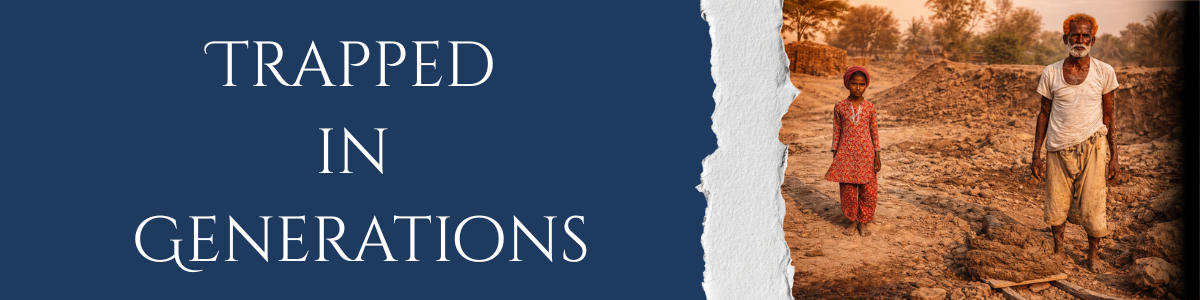
However, some families settled in remote villages and underdeveloped areas where there were no churches or educational institutions. These communities remained deprived of education, which led to increased poverty and a lack of financial stability. These were the very conditions that trapped many families in generations of debt and bonded labor.
It is also important to recognize that in our community, it was often the poorest and most marginalized who accepted the message of Christ. This reflects the teaching of the Bible: “The good news is preached to the poor” (Matthew 11:5). These were the people who embraced the message wholeheartedly, while many others chose to ignore it.
As persecution increased over time, the situation worsened. Many churches gradually stopped reaching out to these remote areas, leaving these communities in deeper isolation and hardship.
Over time, it became clear that this is not a temporary issue, but a deep, generational cycle. It often begins with a small loan, but gradually grows to consume an entire family. The debt is then passed from one generation to the next, trapping families in a cycle they cannot escape.
Children in these families are forced to work from a very young age. They are deprived of education and spend their lives repaying the debts of their parents and ancestors. Tragically, even for basic needs like food or medical care, they must take on new loans—pulling them deeper into the same cycle.
In this way, debt becomes a chain that destroys one generation and places the next on the edge of the same destruction.
This is why the solution is not simply to pay off debts. The real need is rehabilitation—a long-term, sustainable solution that can break this cycle permanently.
This can only happen when:
- Children are given access to education
- Families are provided with skills and livelihood opportunities
- And they are supported with a stable source of income
So that they can not only escape debt, but also live with dignity and independence.
Today, however, there is hope. A new generation is rising with the desire to do something different. Through faith revival programs, they are strengthening their spiritual lives while also striving to break free from the cycle of poverty.
Through our small initiative, we are working toward the same goal—
to provide education to children,
to create better opportunities for their future,
and to end the cycle of debt and bondage that has continued for generations.
